Here at the CIPR Crisis Communications Network we are always keen to explore new ways to spread best practice and expose our members to the very latest thinking in crisis communications. Our new ‘In Conversation With’ format has now had two successful outings. The latest featured our Special Advisor, Rod Cartwright, interviewing arguably the world’s foremost crisis communication academic, Dr Timothy Coombs.
Perhaps you may not have heard of Dr Coombs but if that is the case, why are crisis communication practitioners not making more use of the work of academics? Even if you have, it is more than likely you will have read case studies that draw on Dr Coombs’ work. So, what can his insights do to help us on an ongoing basis and what does he make of the challenges we are facing today: AI, mis- and disinformation, the ‘polycrisis’, and the extreme polarisation of public discourse.
Dr Coombs’ most famous work is his Situational Crisis Communication Theory (SCCT). On the webinar, he explained his theory came about as he saw academic research providing lists of possible strategic crisis responses such as seeking to reduce the offensiveness of what has happened or even denial (not a favourite with Dr Coombs!) and lists of crisis types. However, there was no guidance to the crisis communications professional as to how to link these up to help them choose which strategy would suit which crisis.
The work of Dr Coombs seeks to close that gap by outlining what he calls “intensifying factors”. And much of what he means by that is the past and current reputation of the organisation.
The work of Dr Coombs seeks to close that gap by outlining what he calls “intensifying factors”. And much of what he means by that is the past and current reputation of the organisation. A good reputation is, of course, to be strived for, but in a crisis a bad reputation has much more impact on how the organisation may fare and means that the organisation’s approach must be that much swifter and more fulsome.
According to SCCT, evaluating the crisis type i.e. was it caused accidentally or intentionally; the organisation’s crisis history (is the organisation crisis-prone?); and the organisation’s prior relationships and reputation will help crisis managers predict the level of reputational threat to an organisation and how that organisation’s stakeholders will perceive the crisis, and attribute responsibility for that crisis to the management team.
This thinking gives us a framework to guide the advice we give to senior leaders in a crisis, grounded in real-world research and in the responses of practitioners with whom Dr Coombs first floated the theory. This respect for both practice and theory means Dr Coombs speaks a language we can all identify with, especially when he said at the webinar that an “apology is not magic… you can’t think that that’s a magic wand” and pointed out that real empathy needs words and actions or as the session’s Chair, Rod Cartwright, remarked, there is a need to “operationalise empathy” into real-world responses that matter to stakeholders and victims
Managing “moral outrage” and AI as “digital assistant”
Useful though SCCT might be, Dr Coombs was the first to say that when it comes to the type of management misconduct crises we have seen a lot of lately, new thinking is required. These types of crisis lead to what Dr Coombs called “moral outrage”, which is made up of feelings of injustice, exploitation, anger and disgust that defy the usual norms of reputation management.
It’s a whole new ball game… reputation is really not such an issue. Probably, no matter what you do, you’re not going to improve your reputation… and there’s going to be this need for punishment.
As he explained: “It’s a whole new ball game… reputation is really not such an issue. Probably, no matter what you do, you’re not going to improve your reputation… and there’s going to be this need for punishment. And you hate to say this, but you’re going to have have to say that to the management team. We’ve got to embrace the pain. It’s going to hurt for a while, but if we do these right things we’ll get through it bette’ and stronger towards the end.”
This is good advice and as crisis communicators, we will need to rise to the challenge of delivering it when necessary.
Dr Coombs likens the role of AI in crisis communication more to a “digital assistant”, but it cannot be allowed to take the decisions for us. AI will help us monitor trends and spot patterns; he cautions that if you ask AI to find a pattern it will, but that does not mean that pattern is meaningful or useful. Curiosity and imagination are crucial attributes to enable crisis practitioners to think the unthinkable and prepare for it, whatever the technology.
“Sell the crisis”
Speaking to current trends, Dr Coombs highlighted the background to the current social discourse of polarisation, hate and intolerance. His advice when navigating this challenge is to use your organisation’s purpose and values as your moral compass. Sadly, as he observed, ideology is being overlaid into communications when what is required is to speak the language of your stakeholders and address their concerns. Terms such as “woke” and even “ESG” and “DEI” can get in the way of dialogue and building understanding.
When it comes to deciding who to engage with and who to ignore if an online debate around your brand becomes noisy and aggressive, Dr Coombs’ advice was to see who will engage with you offline. In his experience, those groups that will not do this are not really interested in finding a solution.
One question from the floor is one we hear a lot at the Network: how to get your management team to take the threat of crisis seriously and to be crisis-ready when the worst happens? Dr Coombs reminded us that human beings are often governed by feelings of “loss-averse”. The management team often feels there is more to lose by speaking out quickly and grabbing control of the crisis narrative. They prefer to sit back and wait.
His advice was to “sell the crisis” to them. Have your facts to hand of how similar organisations have fared in a crisis, what worked and what did not. Tell your management team that we can “be better”.
Become the trusted source in the era of polycrisis
Discussing some of the key themes and challenges included in Rod’s recent report, ‘Reputation, Risk and Resilience’, Dr Coombs addressed the staggering range of crises facing us now, characterised as polycrisis, where present and future risks intersect: the cost of living; climate change; social unrest; war, create an inter-linked and volatile cocktail. In this environment, having a crisis plan is only the start of the process. Crisis practitioners need to be much more proactive, constantly scanning the environment to see how issues on the horizon will become real threats for their organisations.
The challenges of the polycrisis coupled with declining levels of trust in society means it is vital that communicators work to ensure their organisations are seen by their stakeholders as the trusted source. This is crucial as mis- and disinformation becomes endemic. Becoming the trusted source is an objective we need to adopt as part of our crisis preparedness, if not for our entire PR practice.
Further reading
- Institute for Public Relations Crisis Communication document (being revised)
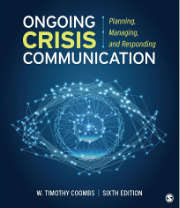
- Coombs, W. T. (2023). Ongoing crisis communication: Planning, managing, and responding. Sage.
By Chris Tucker, Co-Chair, CIPR Crisis Communications Network
Discover more from
Subscribe to get the latest posts sent to your email.