
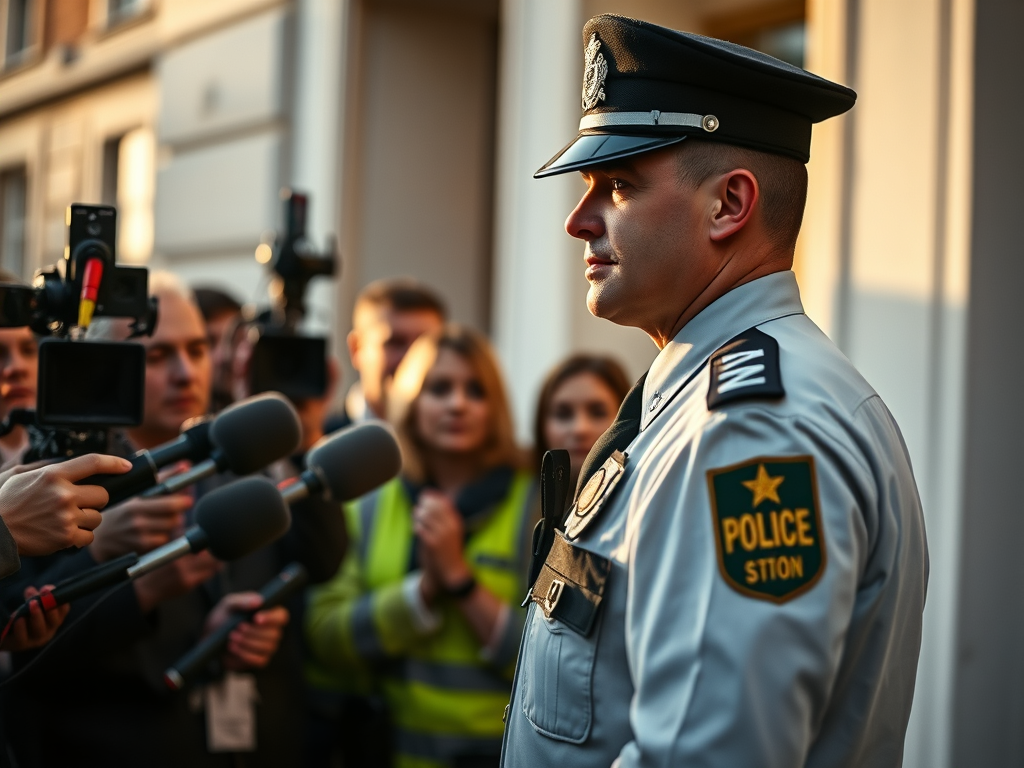
The tragic case of Nicola Bulley, and how the reporting unfolded, might be the tipping point for a different relationship between police and the media.
An independent review commissioned by the Lancashire Police and Crime Commissioner and led by College of Policing into the operational handling of the case had many recommendations. One included:
The College of Policing and the NPCC should consider how confidence between the police service and the media can be rebuilt, so that, for example, appropriate non-reportable media briefings are actively encouraged where there is a policing purpose. This process will require a balanced and engaged approach from both policing and the media.
This sounds reasonable. A response to that report by The Society of Editors, the Crime Reporters Association and The Media Lawyers Association, titled The Police and the Media – Repairing the Relationship, calls for similar non-reportable briefings; for both police and press officers to build a trusted dialogue with journalists; and for press conferences for accredited media only.
Now plans are afoot to see how the relationship between the media and the police can be managed going forward.
An extraordinary level of trust would have to exist between police officers and the media if officers are to feel confident that non-reportable dialogue will not be used.
In my view, an extraordinary level of trust would have to exist between police officers and the media if officers are to feel confident that non-reportable dialogue will not be used. It is natural for officers to feel nervous in speaking to the media. Trust does need to be rebuilt, but with the recent round table with National Police Chiefs Council and The Society of Editors et al, it sounds like steps are being taken to rectify this and that can only be viewed as a positive.
There is no getting away from the fact, for a multitude of reasons, an information vacuum opened up in the Nicola Bulley case. Once that happens, it can be pretty difficult for the police to regain control of the story and to restore public confidence.
Speaking from personal experience as a professional communicator, I know how easy it for a breaking news story to be filled with inaccurate details if none are forthcoming from official sources, which is why I always tried to do what I could from the Police and Crime Commissioner’s perspective, without compromising an investigation. From my perspective, if police couldn’t comment for operational reasons, we would approach the Commissioner, or the Deputy Mayor for Policing and Crime as, while ever mindful of operational restrictions, they might be able to comment more generally on aspects of community safety. However, this goes nowhere near solving the problem of media having access to police officers and information they feel they need to be able to do their job effectively.
I also know how difficult it is for police press officers to be able to give out information if an inquiry is fast moving and the command team have a view on what can and can’t be released for solid reasons. That is why this recommendation from the College of Policing report resonates:
“Lancashire Constabulary should ensure that their media and engagement team has sufficient influence and representation in the decision-making process for the declaration of critical incidents, to provide a better understanding of the media interest and public confidence levels.”
as does this:
“Lancashire Constabulary’s chief officer team should review how media expertise is connected to chief officer team oversight and discussion, to ensure it has a suitable influence in decision making.”
Journalists have a vital and difficult job to do, as do police press officers. But a system needs to be facilitated that ensures they can both do their job within a structure that works and is fit for purpose and doesn’t compromise a fast-moving inquiry that could result in significant charges.
Journalists have a vital and difficult job to do, as do police press officers. But a system needs to be facilitated that ensures they can both do their job within a structure that works and is fit for purpose and doesn’t compromise a fast-moving inquiry that could result in significant charges.
In an ideal world, journalists would ideally have what they need to report accurately, fairly and in quick time. Press officers would be empowered to be able to do the job they are experts in using their knowledge and experience to make judgement calls in their field of expertise. They would also have a seat at the top table, whereby their opinion would be respected and acted upon. This would work better for the public, so they are kept informed, reassured and aren’t being fed anxiety inducing, inaccurate speculation that helps no one and diverts resources that need to be focused on the investigation.
Compromise and understanding are key because there will always be another breaking crisis, a 24-hour news cycle, armchair sleuths, social media tornados and it will take a strong, yet flexible structure to contain that.
Communications professionals already know that we can be the last people brought into the room, when really, we should be the first. It does not matter what is done and how effective the inquiry is, if the public perception is different. If what you are undertaking isn’t being communicated effectively, how can the communities you serve retain confidence and feel assured? If public perception is affected, what are your next steps to influence and regain trust?
The answer is to bring your media experts in and listen to them. They know how something will unfold and what needs to be done to avoid a vacuum opening up. They will know how to work with trusted media sources.
The answer is to bring your media experts in and listen to them. They know how something will unfold and what needs to be done to avoid a vacuum opening up. They will know how to work with trusted media sources. They will help to ensure that journalists get what they need, within reason, without jeopardising an ongoing investigation.
They will provide a response driven by the facts and expertise that exists within the organisation, which can then be given to the journalists who want to inform the public of the facts as they stand. Not speculation, not a vacuum filled by noise, not inaccurate details, but a narrative, based on the foundations of effective news gathering by qualified journalists, who have a relationship with the police built on mutual trust and respect.
Now that is something worth working towards.
By Dee Cowburn
Dee Cowburn has worked within the policing and crime world, as head of communications to the Police and Crime Commissioner and then heading up communications for the Mayor and Deputy Mayor for Policing and Crime in West Yorkshire.
She advised on many press responses during that time including the fatal attack in a classroom on teacher Anne Maguire by a student, the death of Jo Cox as she attended a surgery for constituents, and the recent murder of a teenager outside a primary school.
She now runs her own crisis communications consultancy.
Image: AI generated
Discover more from
Subscribe to get the latest posts sent to your email.
One thought on “Repairing the relationship between the media and the police ”