We have hosted more than 40 events since the Crisis Communications Network was launched in 2021. There are too many highlights to list here. But for me personally, the chance to interview one of my crisis and disaster management heroes, Professor Lucy Easthope, is right up there.
Lucy is the UK’s foremost authority on recovering from disasters and has spent much of her career dealing with the aftermath of events most of us hope never to encounter. During our session, we got talking about the Covid-19 pandemic and the long tail it has left behind.
She remarked: “We are all disaster survivors now.”
That phrase really stuck with me because of its simple truth.
“We are all disaster survivors now.”
Professor Lucy Easthope
Before Covid, the overwhelming majority of us would never experience disaster or a massive crisis personally. These things happened to other people, often in other countries. We might watch them on the news, perhaps donate to a relief appeal or feel sympathy for those affected, but there was a psychological distance between us and the event.
Covid was different.
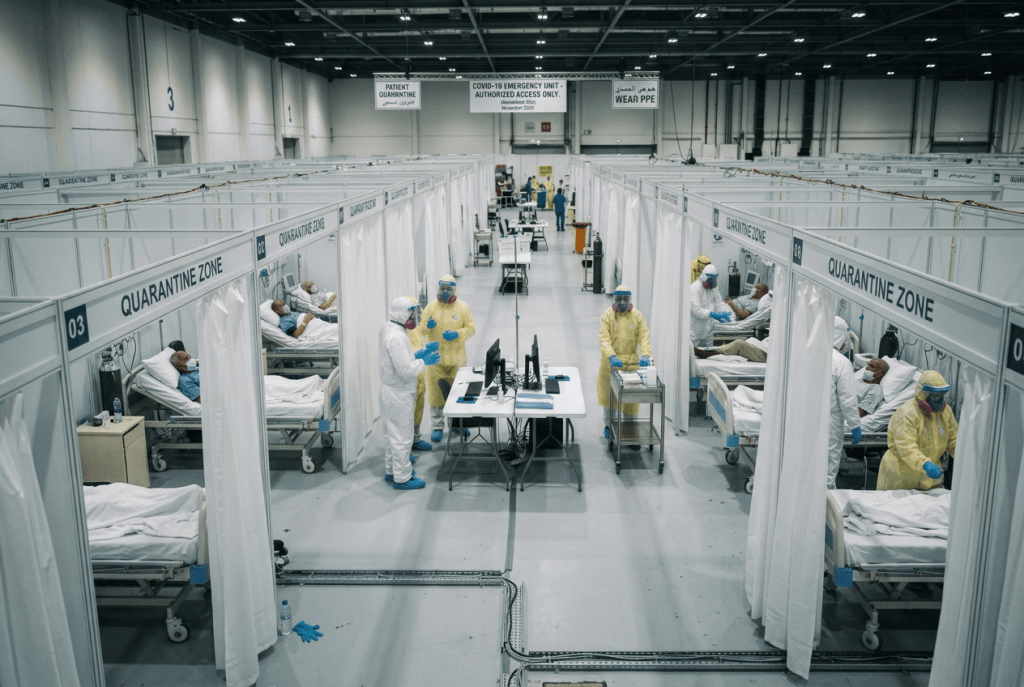
Whether we caught it or not. Whether, tragically, we lost someone we loved or were spared that pain. Whether we were working throughout it, furloughed, home-schooling children, caring for vulnerable relatives or simply trying to make sense of the daily updates – those of us still here had survived it.
We had all, in some way, lived through a disaster.
And I think that has changed us.
The crisis became personal
The Crisis Communications Network itself was born out of that strange moment. We were stuck at home, with more time on our hands, watching a global crisis unfold in real time and trying to make sense of what it meant for our organisations, our profession and our own lives.
It was also a period of extraordinary political and social upheaval. Brexit had already polarised public debate and Covid seemed to add another layer of uncertainty, anxiety and division.
For communicators, the experience was also transformative. Overnight, communication became central to organisational survival. Leaders needed us to explain rapidly changing circumstances, interpret uncertainty, reassure employees, engage customers, respond to government announcements and navigate an information environment that changed by the hour.
For many of us, Covid won communications professionals a seat at the top table.
For many of us, Covid won communications professionals a seat at the top table.
The question now is whether we can keep it.
The mental health legacy
One of the most obvious long-term consequences of the pandemic is the impact on mental health.
There is a lingering sense of anxiety that can be difficult to articulate. We have experienced a prolonged period in which uncertainty became normal. We learned to live with restrictions, changing rules and a constant drumbeat of bad news.
And just as Covid began to recede, other crises arrived.
War in Europe. The cost-of-living crisis. Political instability. Energy insecurity. Climate emergencies. Economic uncertainty. The rapid arrival of AI and all the opportunities – and anxieties – that accompany it.
At times it can feel as though we have already experienced one of the Four Horsemen of the Apocalypse: pestilence. Why wouldn’t we worry about the others – war, famine and death – riding behind it?
Perhaps that sounds melodramatic. But there is a curious psychological reality behind it. Once you have experienced a genuinely existential disruption, the possibility of another one no longer feels quite so remote.
The result is a strange, lingering sense of dread: not necessarily that disaster is about to happen, but that it could.
We have become more polarised – and less forgiving
Covid also changed how we debate.
Social media gave everyone a platform, but it also gave everyone a permanent record. Keyboard warriors came to the fore. It became much easier to say things online that most people would never say face-to-face.
And unlike a conversation in a pub, an online argument can be searched, shared and resurrected years later.
That has consequences for crisis communications.
For organisations, climbing down from a position has become harder. Admitting uncertainty can be interpreted as weakness. Changing your mind can be presented as inconsistency. A badly judged response can live forever.
The pandemic did not invent polarisation, but it exposed and accelerated it.
For communicators, that means the job is no longer simply to transmit information. We are increasingly operating in a world where people interpret the same facts through very different experiences, identities and assumptions.
We changed the way we work
Then there is the impact of working from home.
For many people, remote working was a necessary response to the pandemic. For some, it has become a permanent feature of working life.
There have undoubtedly been benefits. Flexibility, reduced commuting and new approaches to collaboration are now part of the workplace landscape.
But something else has been lost.
Communication is not only about words. It is about proximity, observation, relationships and those informal conversations that happen when people share a physical space.
For our profession in particular, this matters. Especially for those just starting out in PR and communications.
Crisis communication relies heavily on relationships and trust. Knowing who to call. Understanding the dynamics around a table. Picking up a hesitation in someone’s voice. Having the conversation that never appears in a Teams meeting.
Crisis communication relies heavily on relationships and trust. Knowing who to call. Understanding the dynamics around a table. Picking up a hesitation in someone’s voice.
Perhaps Covid taught us that technology can connect people remarkably well. But connection is not necessarily the same as relationship.
The unexpected legacy of “school’s out”
There is an interesting parallel with education.
During the pandemic, children were told they could learn from home – and many did an extraordinary job of doing so. But we have also seen a lingering question about the value of being physically present in school.
For some young people, perhaps the lesson they absorbed was that attendance is optional because learning can happen anywhere. Before Covid one in ten children were “persistently absent” from English schools. Now nearly one in five are.
The same question applies to organisations.
If we can work anywhere, communicate anywhere and meet anywhere, what do we lose when we stop coming together?
Perhaps the lesson of Covid is not that one model is right and another wrong. It is that we need to be much more deliberate about what each mode of communication is actually for.
What does this mean for crisis communicators?
The irony is that the profession emerged from Covid with greater visibility and influence, at precisely the moment when the communication environment became much more difficult.
We now operate in a world of permanent uncertainty. Audiences are more anxious, more sceptical and more divided. Employees expect more. Leaders need more. And crises increasingly overlap rather than arrive one at a time.
That creates a challenge, but it also creates an opportunity.
Because if Covid taught us anything, it is that communication is not an accessory to crisis management. It is part of how organisations survive, adapt and recover.
If Covid taught us anything, it is that communication is not an accessory to crisis management. It is part of how organisations survive, adapt and recover.
But a seat at the top table comes with responsibilities.
We must use that influence not simply to make organisations sound better, but to help them behave better. We need to challenge assumptions, understand stakeholders, anticipate emerging risks and tell leaders what they may not want to hear.
And perhaps most importantly, we need to remember that everyone affected by a crisis brings their own experience of it.
That is what I took from Lucy Easthope’s words.
“We are all disaster survivors now.”
Not because we have all suffered equally. We haven’t.
But because the psychological distance between us and them has narrowed.
We have all lived through a crisis. We have all watched institutions struggle with uncertainty. We have all experienced the anxiety of not knowing what comes next.
Maybe that is why empathy has become such an important part of crisis communications.
And maybe that is why the seat we won at the top table during Covid is one we should fight to retain.
Not because communication professionals deserve a louder voice.
But because, in a world where crisis has become everybody’s business, good communication has never mattered more.
Author: Chris Tucker, Co-Chair, CIPR Crisis Communications Network
Image: AI generated
Discover more from
Subscribe to get the latest posts sent to your email.