
Why crisis response can’t save bad decisions
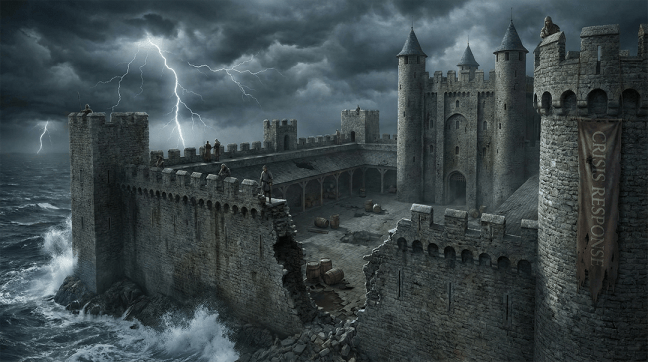
Storm-lashed medieval stone castle on a cliff edge with lightning striking over a turbulent sea, a large breach in the outer wall, guards standing on the battlements, and a vertical banner reading “Crisis Response” hanging from a tower, symbolising leadership under pressure and reputational risk.

The effectiveness of crisis communications is rooted in proactive preparedness rather than reactive response. Organisations must integrate communications teams into decision-making processes before crises arise. By building reputations and relationships over time, they can better withstand challenges. Success in crises depends on prior investments in integrity and stakeholder trust.

MEDIA FRAGMENTATION AND THE RISE OF THE GATED NEWS COMMUNITY

Inevitably over Christmas and New Year, we meet up with friends and family we have not seen for a while and with the suspension of normal activities there is plenty of time to chat. In the past most people getting together in this way would agree on what the issues of the day were but … Continue reading MEDIA FRAGMENTATION AND THE RISE OF THE GATED NEWS COMMUNITY

THE CHALLENGES OF REACHING AND SUPPORTING CONSUMERS IN A CRISIS

When a crisis hits, companies are faced with the responsibility of reaching out to thousands, sometimes millions, of people to support those impacted. But what happens when systems crash, contact data is lost, and communications teams are left picking up the pieces?  At the latest CIPR Crisis Communications Network event, I was joined by Nic … Continue reading THE CHALLENGES OF REACHING AND SUPPORTING CONSUMERS IN A CRISIS